
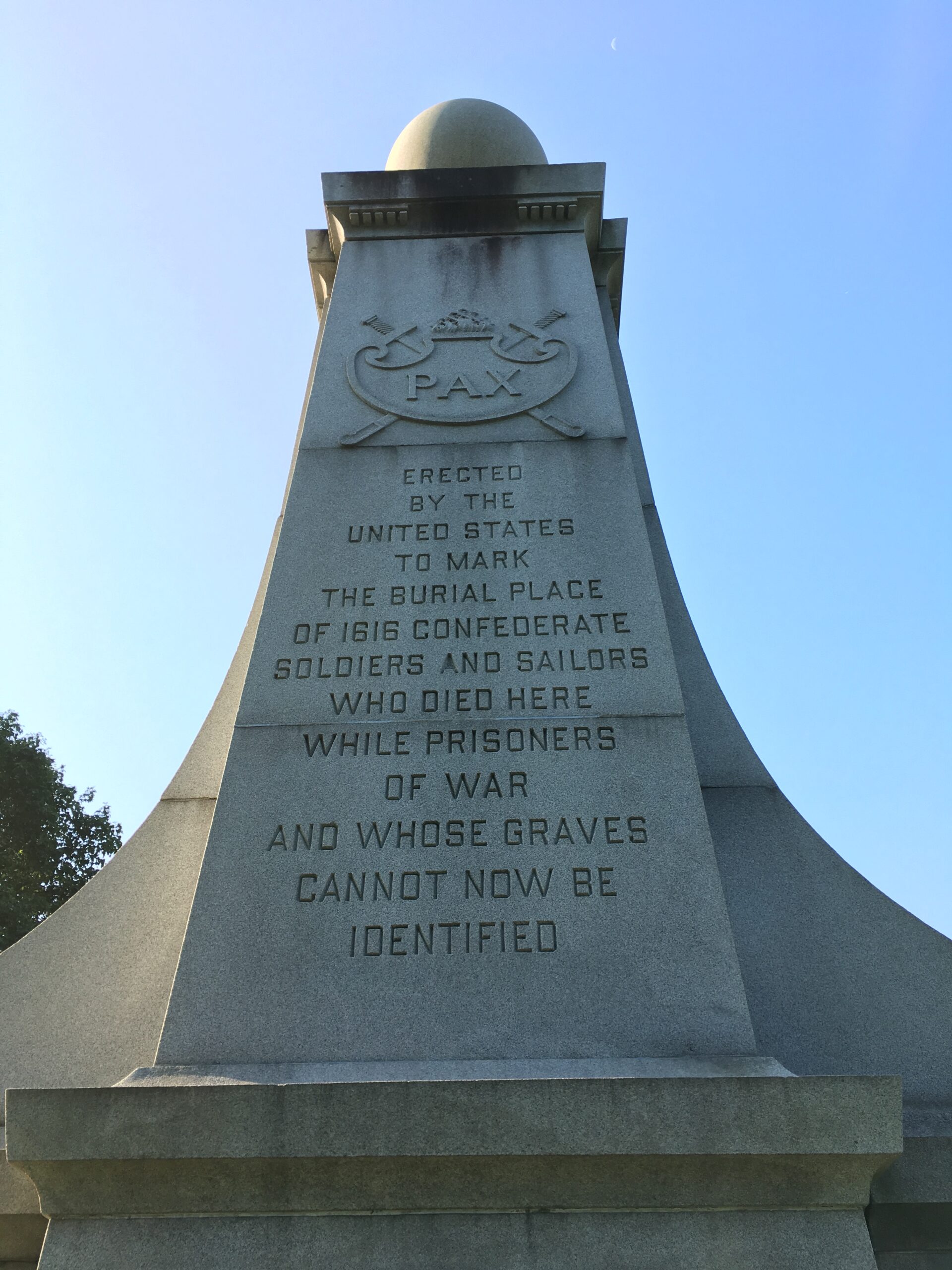
For almost 100 years stood a monument to Confederate Dead who perished while imprisoned at Camp Morton in Indinanapolis.
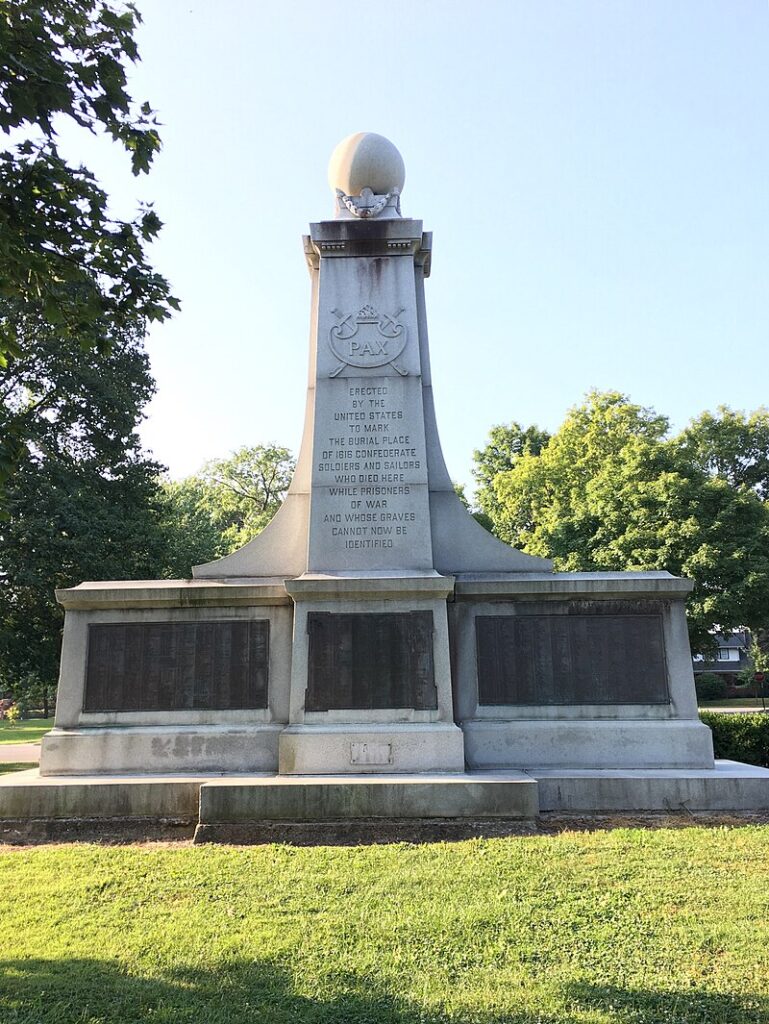
Clearly visible on the monument was a simple epitaph:
Erected by the United States to mark the BURIAL PLACE of 1616 Confederate soldiers and sailors who died here, while prisoners of war and whose graves cannot now be identified.
(the bronze plates at the base of the memorial had all 1616 names listed on them. )
While more than 700 Union soldiers buried at Greenlawn were transferred to the then-new Crown Hill Cemetery after it became a national cemetery in 1866, the Confederate dead remained at the old Greenlawn cemetery. Crown Hill’s designation as a national cemetery and this reinterment were part of the U.S. government program initiated to locate, move when necessary, and mark the graves of Union troops who died in the Civil War. The U.S. Congress made no such effort either to provide for or identify Confederate burial sites. Instead, Southern states with the help of Southern advocacy groups, such as the Daughters of the Confederacy, campaigned to recognize the graves of Confederate troops. This changed in February 1908. President Theodore Roosevelt voiced support for marking the graves of those former Confederate officers who reenlisted, served, and distinguished themselves fighting in the Spanish-American War.
Former Confederate army colonel William C. Oates, who served as a U.S. Army brigadier general during the Spanish-American War, set out to find places where Confederate soldiers should be memorialized. He toured Greenlawn to assess the viability of the government’s grave-marking effort in Indianapolis. Upon inspection of the soldiers’ burial records, some of which were missing and others of which were damaged in a fire, Oates suggested creating a single, mass grave marker with the names of the 1,616 soldiers engraved upon it rather than erecting hundreds of individual markers inscribed with the word “unknown.”
Oates volunteered to seek funds for the project. In May 1909, the federal government accepted Oates’ proposal and paid Van Arminge Granite Company of Boston, Massachusetts, $6,000 to design, manufacture, ship, and place the obelisk at Greenlawn. The Indianapolis Star announced in May 1910 that the “monument erected by the United States government to the memory of several hundred Confederate soldiers at Greenlawn Cemetery has been completed.” Among the names of the dead listed on the obelisk were at least 12 African Americans who died at the camp but who were not soldiers. They were the chattel property of Confederate enslavers with whom they were imprisoned.
These memorial originally stood in the Greenlawn Cemetery. This was the first public cemetery in Indianapolis. It was located on a patch of ground between Kentucky Avenue and the White River. The cemetery contained the graves of many pioneers, Civil War soldiers, and African Americans. It was closed to public burials toward the end of the 19th century.
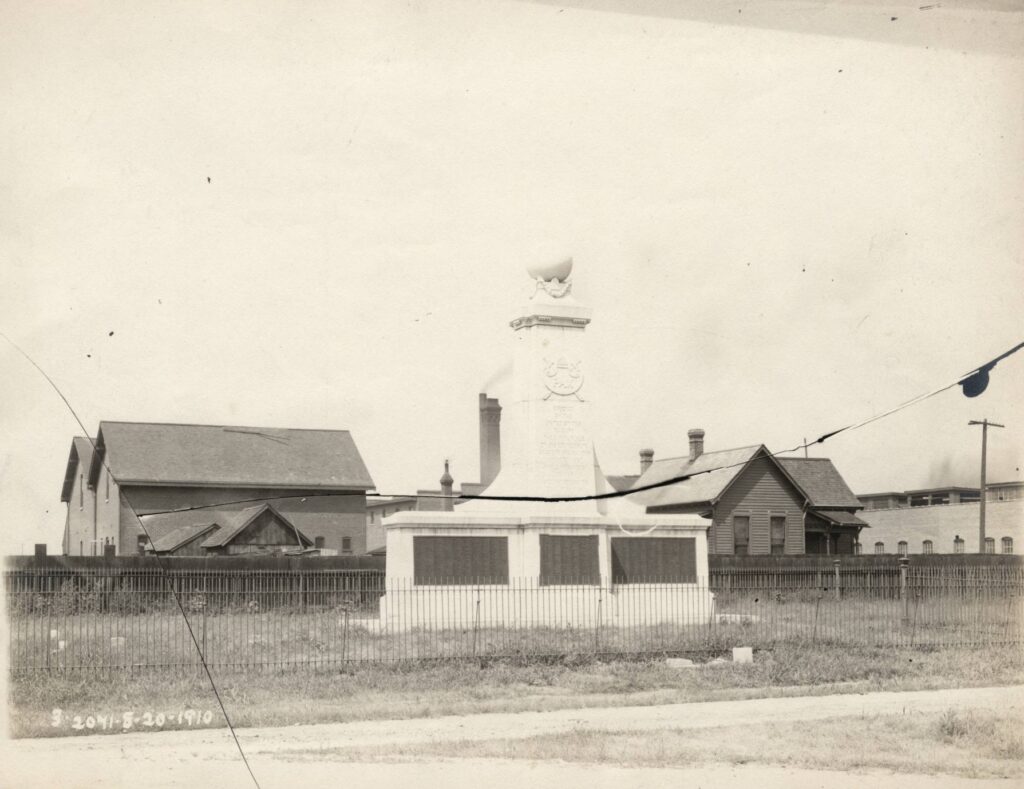
This was the monument in its original location at Greenlawn Cemetery. It was constructed in 1910 (45 years after the last Confederate died at Camp Morton) It stood over the graves of the Confederate soldiers who were buried in the cemetery. The graves were poorly marked and record keeping wasn’t the best. The buildings in the background are reporedly no longer in existance, so it is difficult to find the exact location of the original monument today.
There is some varied history regarding whether or not the Confederate dead were originally buried in mass burial trenches at Camp Morton.
It is not known for certain, but it is estimated that approximately 1,700 prisoners died at Camp Morton between 1862 and 1865. Confederate prisoners were buried in wooden coffins in trenches on five lots purchased near the City Cemetery, which was later expanded and became known as Greenlawn Cemetery. The individual gravesites were marked with wooden boards bearing painted identification numbers that were worn away by the passage of time. Some of the Confederates buried in Indianapolis’s City Cemetery were exhumed and returned to their families; however, the remains of 1,616 Confederate prisoners were left at Greenlawn. In 1866 a fire ravaged the cemetery office, destroying the records that gave the precise location of the burials.
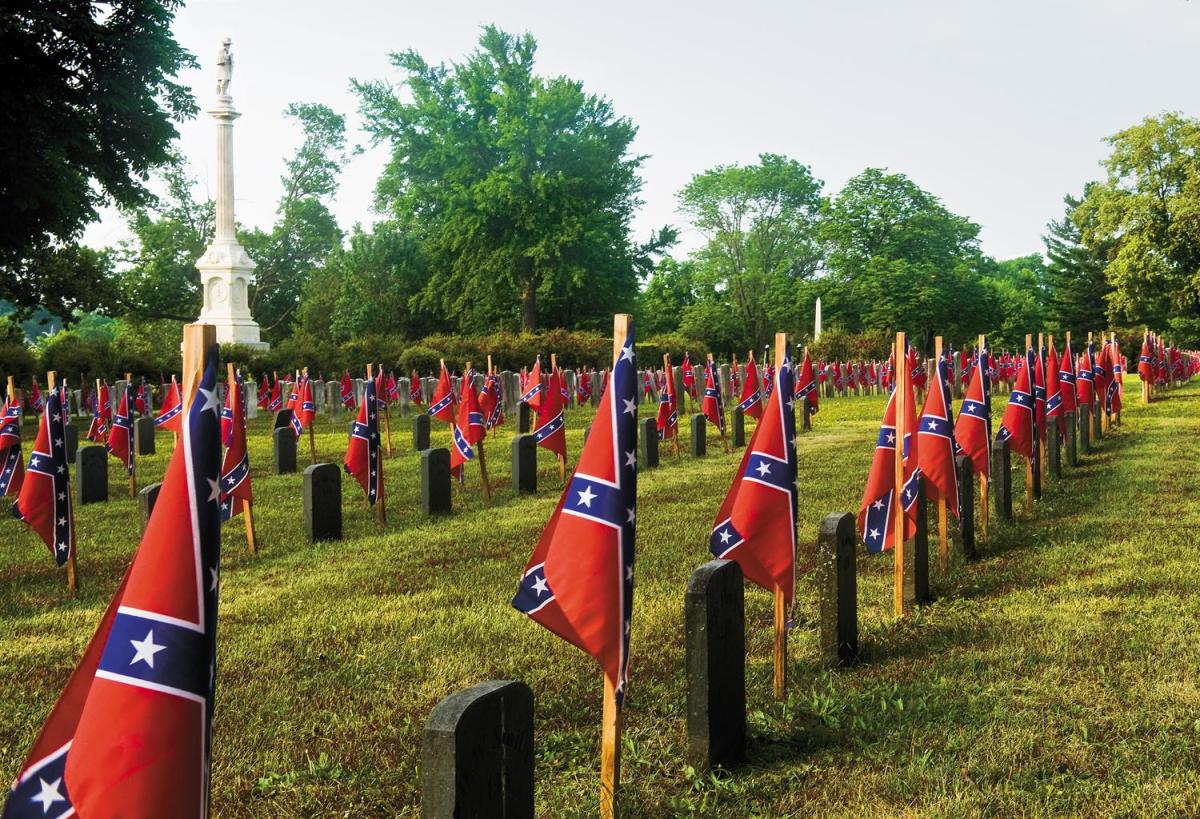
In the 1870s construction of an engine house and additional tracks for the Vandalia Railroad caused the Confederate prisoners’ remains to be removed and reburied in a mass grave at Greenlawn. In 1906 the U.S. government sent Colonel William Elliot to Indianapolis to locate the mass grave, and in 1912 the Confederate Soldiers and Sailors Monument was erected at the site to honor the 1,616 Confederate prisoners of war who were buried at Greenlawn. The monument was moved to Indianapolis’s Garfield Park in 1928. The remains from the Confederate gravesite were moved to Indianapolis’s Crown Hill Cemetery in 1931 and buried in a mass grave in Section 32. The area became known as the Confederate Mound. In 1993, the names of each fallen Confederate at Camp Morton were inscribed on ten bronze plaques.
In May 2020, a resident of Minneapolis, Minnestota named George Floyd died while being detained by the Minneapolis Police Department. This sparked riots reminiscent of the Rodney King incident in the early 1990s.
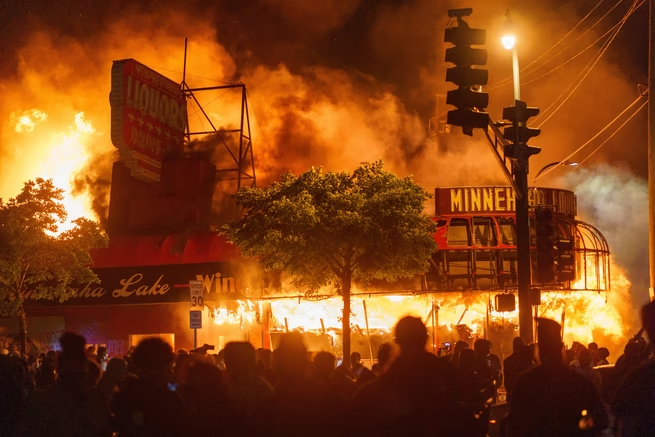
Due to continued sensationalism that memorials dedicated to Confederacy promote racism and racial tension, the monument was dismantled June 08, 2020 under the direction of Joe Hogsett, Mayor of Indianapolis, Indiana. The proponents of the memorial destruction felt like this memorial, which is essentially nothing more than a grave marker, was racist in some manner. It was widely reported that the violence would end in Indianapolis when this memorial was removed.
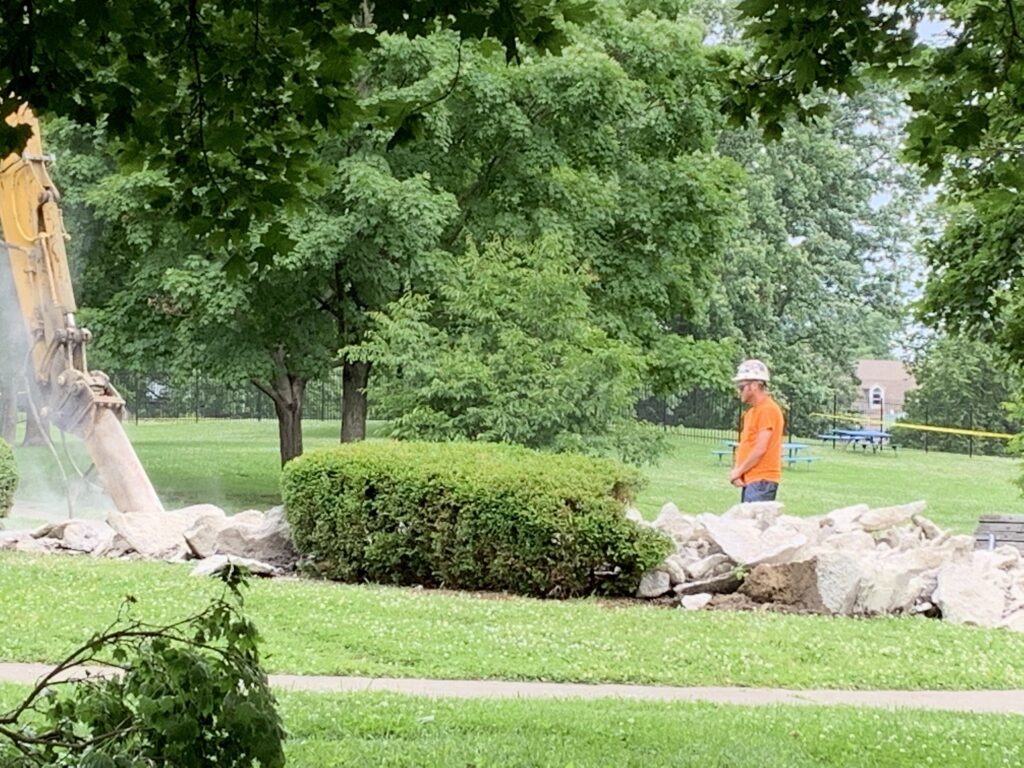
The Sons of Confederate Veterans reportedly raised funds to restore the monument, but could never get the Indianapolis leaders to take action to restore or save the monument. It was “dismantled” and removed from Garfield Park.
See this video https://www.youtube.com/watch?v=uyejbrcJ2BU
The Sons of Confederate veterans tried to save the cannonball top of the memorial and the bronze plaques with the names of the deceased Confederates. We were met with continual opposition and deception regarding the pieces of the memorial.
Mayor Hogsett was reported as having said, “he wanted that monument ground into dust and spread along walking trails.” The SCV thought it was political rambling until it was discovered that the 110 year old monument was in fact pulverized and the bronze plaques were melted down.
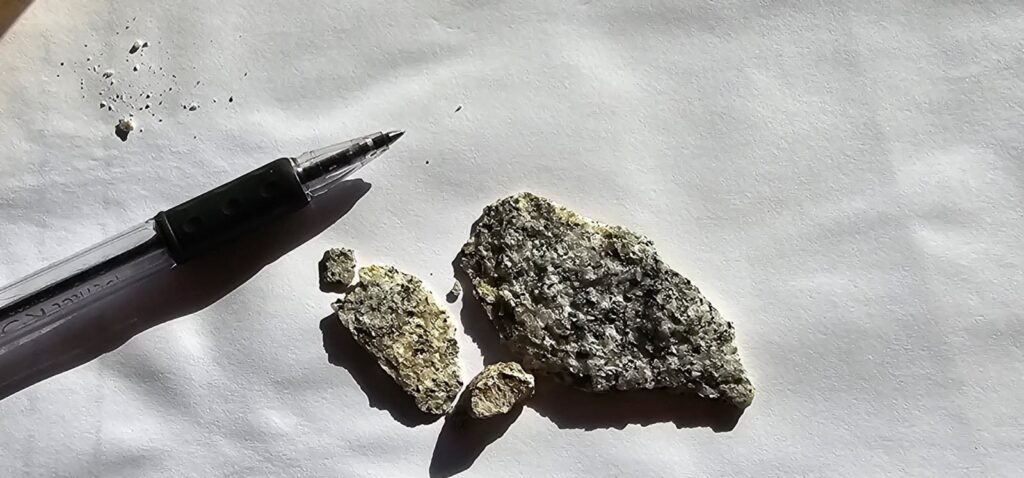
These are the only pieces of the granite monument known to still exist. They were saved by the Indiana Division, Sons of Confederate Veterans.